Steampunk Goggles: A Journey from Their Origins to the Present Day
Ah, steampunk goggles! Few accessories are as instantly recognizable within the retrofuturistic aesthetic. Whether you embody a Victorian dandy, a mad scientist, a zeppelin pilot, or a daring adventuress, no steampunk outfit truly feels complete without a pair of goggles. And yet, behind this iconic object lies a very real history—one rooted in the harsh realities of the Industrial Age, far removed from neo-Victorian fantasy.
Long before becoming a staple of steampunk fashion, goggles were first and foremost practical tools. The 19th century was an era of coal, iron, and unchecked machinery. Burning cinders, biting winds, flying debris—industrial progress came at a cost, and eyes were particularly vulnerable. Factory workers, railway passengers, early motorists, and aviation pioneers all faced hazards that demanded protection. Goggles were not an aesthetic choice. They were survival gear.
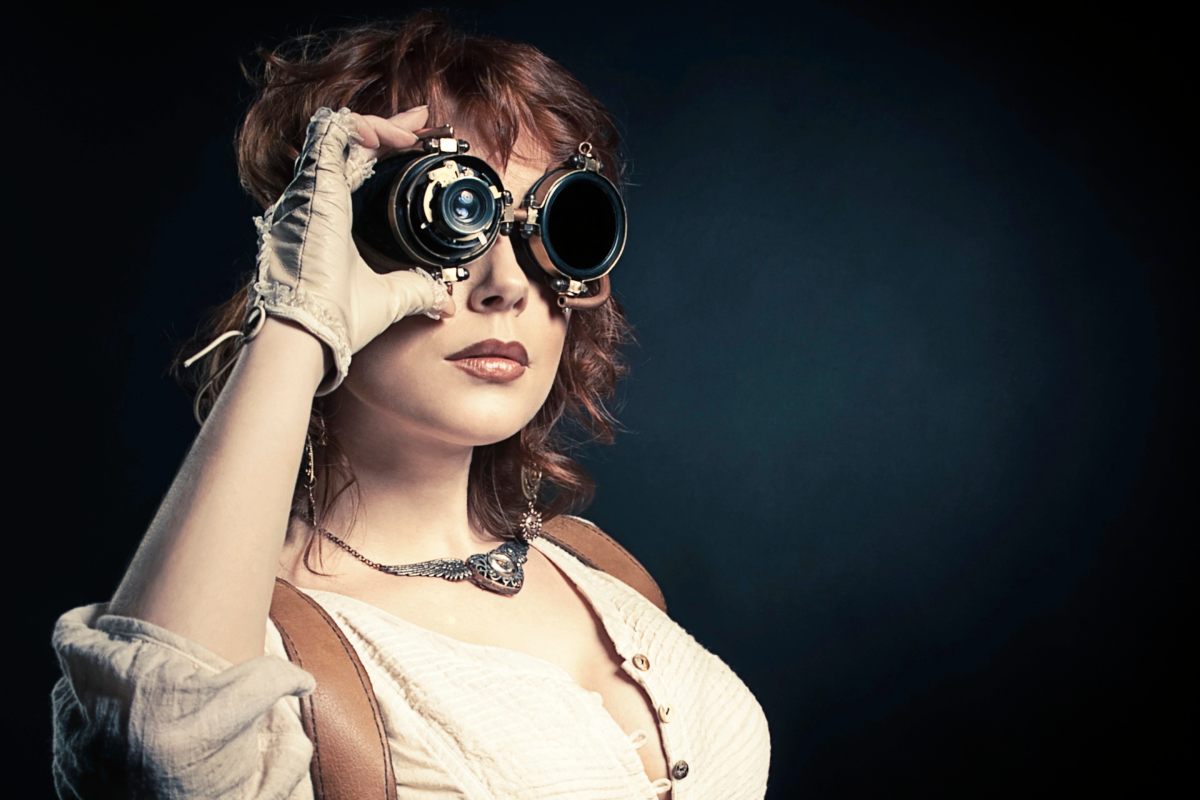
Image credit: Irina Braga


Cinder goggles, the humble ancestors of steampunk goggles
Yes—steampunk goggles do have genuine historical ancestors. During the Railway Mania of the 1840s, cinder goggles began to be mass produced. Contrary to popular belief, they weren’t worn exclusively by railway workers. Passengers needed them just as much. Early train carriages often lacked glass windows, and third-class wagons didn’t even have roofs. Coal dust, ash, and glowing cinders from steam locomotives would blow directly into the cars. To spare their eyes, travelers relied on protective eyewear like these:
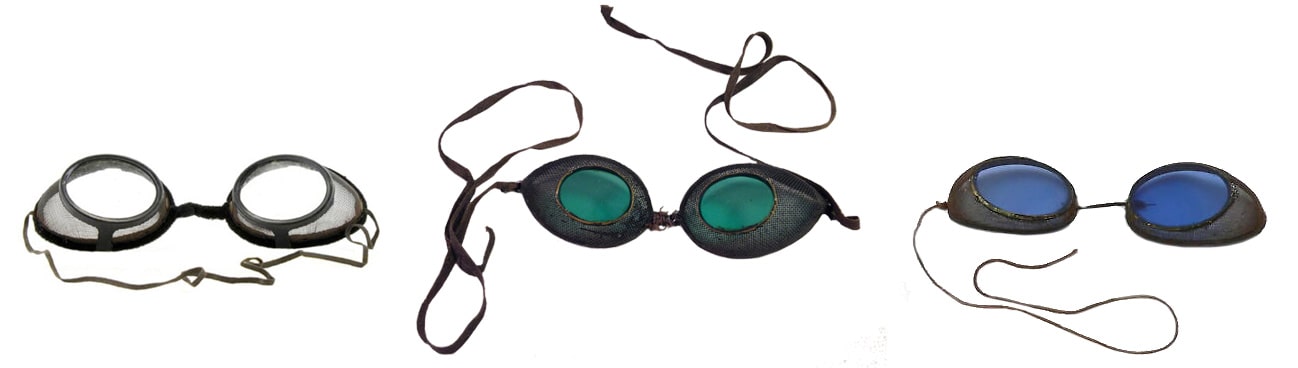
Steampunk goggles? Nope! These are cinder goggles from the 19th century!
Much like traditional spectacles, cinder goggles could feature temples, but leather straps or elastic bands were far more common. These ensured a tight seal against the face, maximizing protection. Lenses came in white, blue, green, or smoky shades—excellent news for modern steampunk enthusiasts who love tinted lenses and want historical plausibility on their side.
Did people wear goggles while driving in the 19th century?
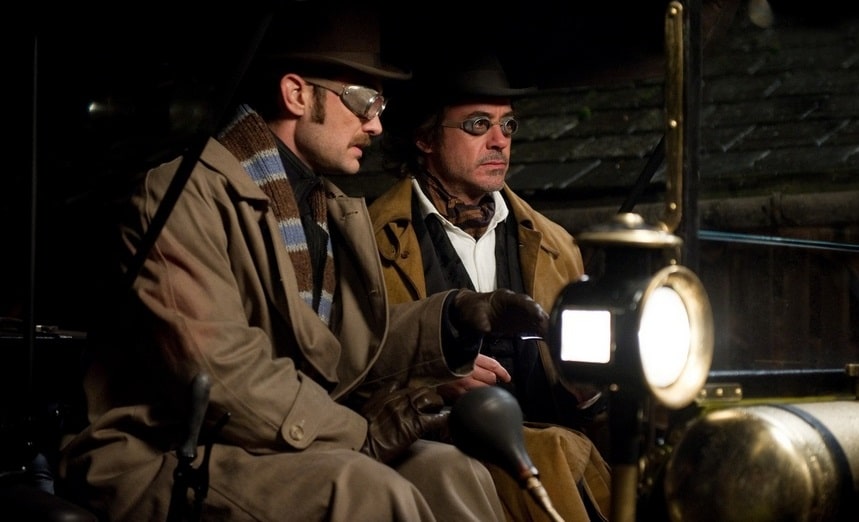 Pop culture sometimes plays fast and loose with history. In Sherlock Holmes: A Game of Shadows (2011), set in 1891, both Holmes (Robert Downey Jr.) and Watson (Jude Law) are seen wearing goggles while driving. Stylish? Absolutely. Accurate? Not quite.
In reality, goggles were rarely worn by motorists in the late 19th century. For one thing, protective eyewear was considered inelegant—especially for women. More importantly, early automobiles rarely exceeded 15–20 km/h (9–12 mph), making eye protection largely unnecessary. This changed at the dawn of the 20th century, when faster vehicles made goggles indispensable. By 1904, Sir Alfred Charles William Harmsworth firmly advocated their use for both comfort and safety in Motors and Motor-driving (see pages 67 and 73). From that point on, the motorist’s goggles became a standard accessory.
And what about aviator goggles?

Steampunk goggles are thus firmly rooted in historical reality. In the 19th century, however, their use remained largely confined to steam railway travel. Goggles designed for aviators, motorists, and motorcyclists would only emerge in the century that followed.
From cinder goggles to steampunk goggles
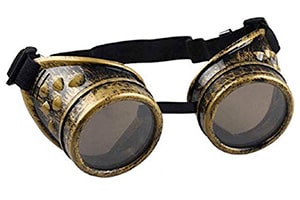
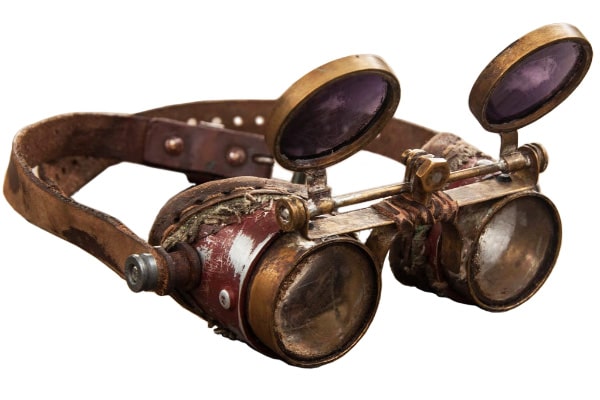
As you can see from the gallery below, steampunk goggles are largely inspired by the cinder goggles of the Victorian age. Same shape, different materials. To add to the steampunk vibe, steampunk goggles are usually made of brass, copper, and leather (or convincing imitations). Some designs incorporate spikes for a post-apocalyptic edge, while others feature magnifying loupes—an irresistible nod to engineers, inventors, and obsessive tinkerers.
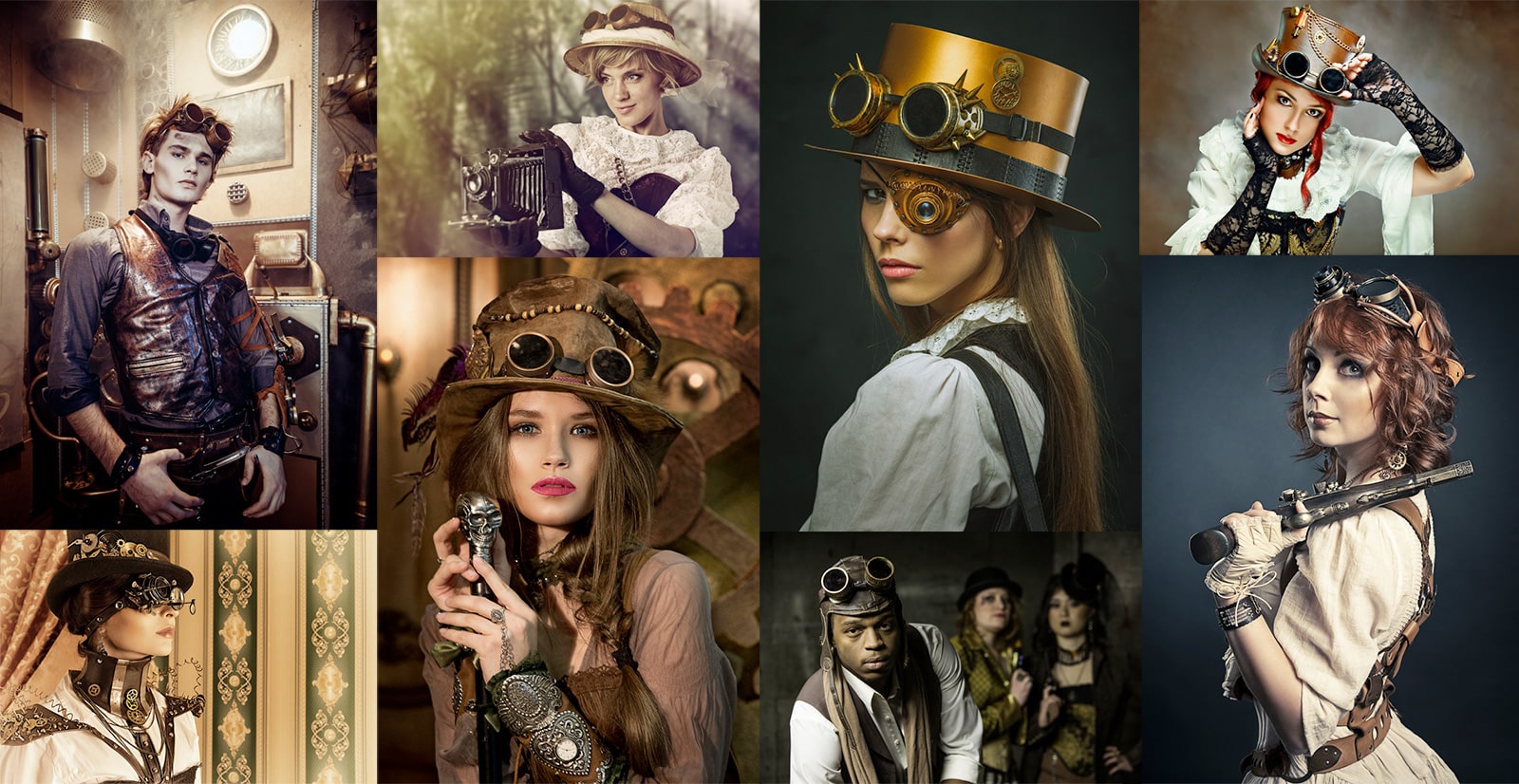
In the steampunk imagination, goggles make perfect sense. Engineers dodge bursts of steam, airship crews battle icy winds at altitude, and mad scientists flirt daily with explosions and corrosive chemicals. Goggles become part of the steampunk “uniform”: functional, symbolic, and undeniably cool.
If you too want to equip your steamsona (steampunk persona) with proper eye protection, take a moment to browse these designs:



Steampunk glasses: an alternative to goggles
Let’s be honest: goggles aren’t everyday wear—unless your daily routine involves conventions, photoshoots, or steampunk weddings. Like corsets, top hats, monocles, or Victorian skirts, they tend to stay in the wardrobe most days.
Steampunk sunglasses, on the other hand, offer a subtle way to inject retrofuturistic flair into everyday life. But what did sunglasses look like in the 19th century? That, dear reader, is a story for another time.