Journey into Steampunk: What If Superheroes Were Born in the 19th Century?
Goggles, tailored waistcoats, brass fittings, and top hats… If you must conceal a secret identity, you may as well do it with impeccable style. Over the past few years, superheroes have enthusiastically embraced retrofuturism, slipping into an alternative 19th century where steam replaces silicon, gears replace circuits, and elegance becomes a weapon in its own right.
Masks, armor, insignias—those remain. But what if superheroes had emerged not in the 20th century, but at the height of the Industrial Revolution? Official artworks, alternative covers, and stunning fan creations all explore this tantalising question. Welcome to a steampunk, showcase where comic-book mythology meets Jules Verne, H. G. Wells, and the smoky skylines of Victorian imagination.
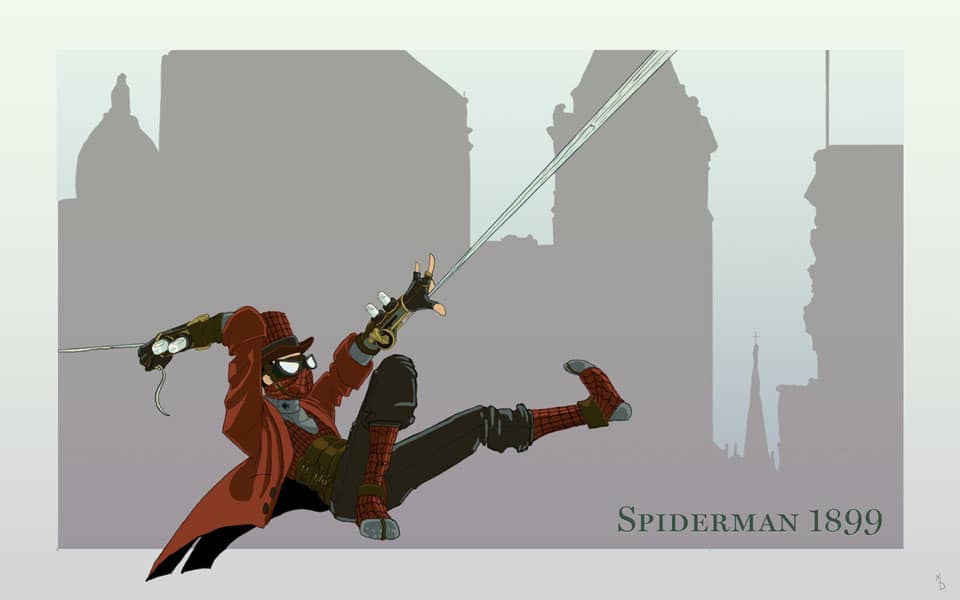
Image credit: Marvel


Familiar heroes, transformed worlds
In a universe ruled by steam, pistons, and soot-choked cities, iconic heroes undergo striking metamorphoses. Spandex yields to frock coats, nanotech gives way to copper plating, and advanced technology is reimagined through exposed mechanisms and hand-crafted ingenuity. Each illustration stands alone as a visual “what if,” playing with atmosphere, posture, and symbolism to reinvent legends without betraying their essence.
1) Batman – The ultimate Victorian vigilante (Jason Lee)
Perched high above an industrial Gotham, Batman looms as a dark silhouette against a haze of smoke and iron. Victorian restraint meets bespoke engineering, resulting in a Dark Knight who needs no theatrics to dominate the skyline.
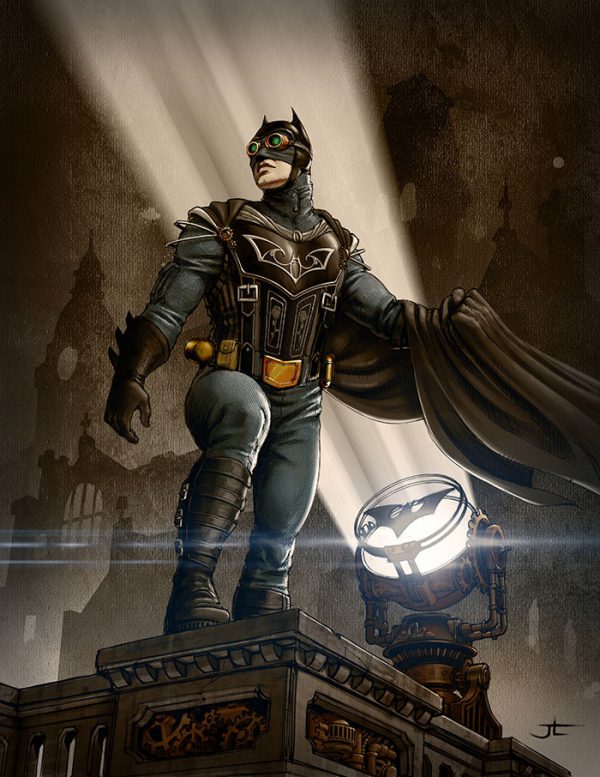
One can easily imagine this version of Batman stalking the streets in a steam-powered Batmobile, boiler hissing softly in the night.
2) The Joker – Chaos in a three-piece suit (Leonardo Paciarotti)
Crooked grin, weapon at the ready, and impeccable tailoring—this Joker feels disturbingly at home in Victorian Gotham. Less circus clown than decadent dandy, he proves that madness, too, can be exquisitely dressed.
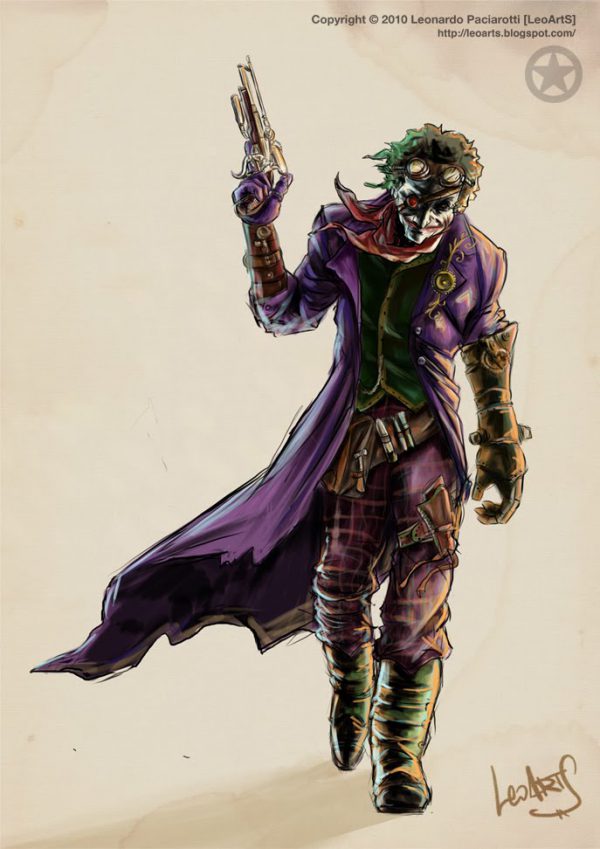
After all, what is a Victorian Batman without a nemesis worthy of the era?
3) Wonder Woman and 4) Superman – Industrial divinity (Dan Panosian)
Standing side by side, Wonder Woman and Superman project a calm, almost timeless confidence. Transposed into a Victorian aesthetic, they retain their aura of power and nobility, as if heroism were ultimately a matter of era—not costume.
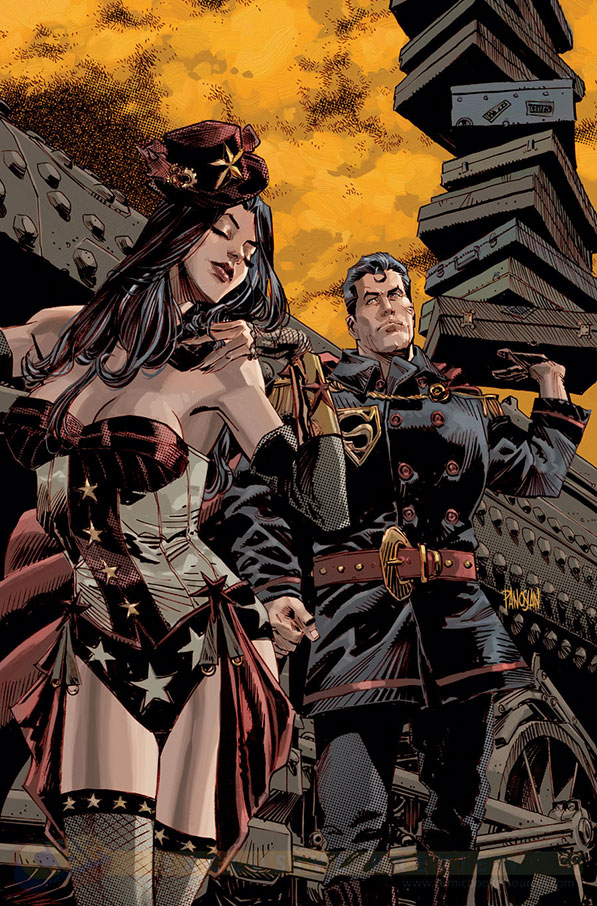
Clark Kent does appear to be drifting a little far from Lois Lane…
5) Aquaman – Atlantis, Jules Verne–style (Richard Horle)
Trident in hand, gaze fixed on distant horizons, Aquaman looks torn straight from a Verne novel. Equal parts monarch and myth, he rules a deep-sea empire where steam, steel, and the abyss collide.
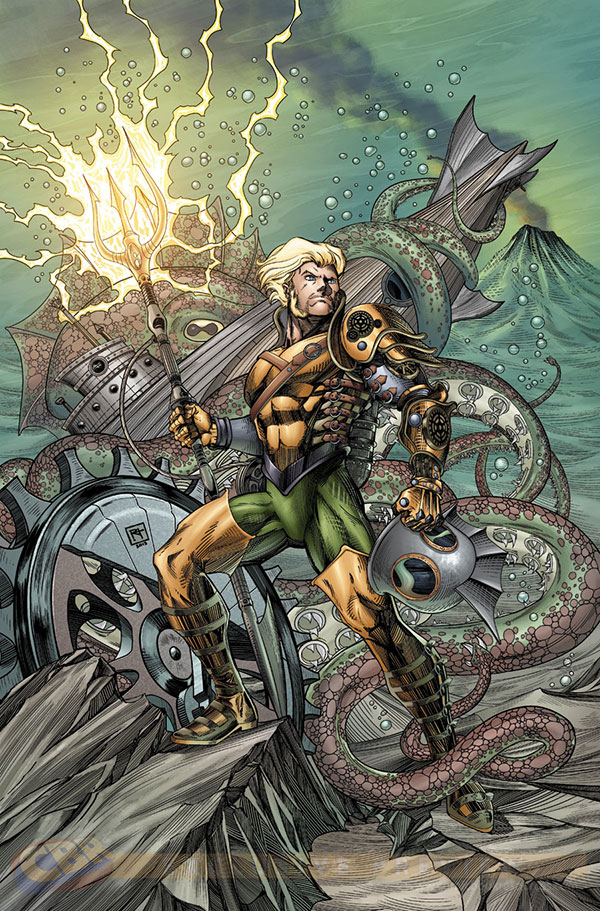
One can only imagine the splendour of a fully realised steampunk Atlantis.
6) Spider-Man – The industrial accident that worked out (Kanjiman)
Scaling brick façades and iron frameworks, Spider-Man retains his agility—even clad in leather straps and mechanical contraptions. Victorian architecture proves just as accommodating as modern skyscrapers.
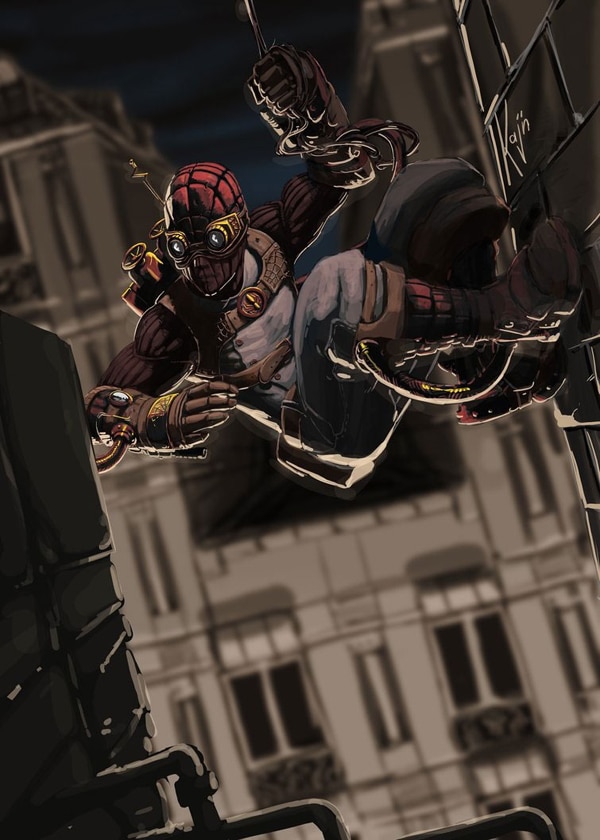
In this universe, did his powers come from a radioactive spider—or a rogue laboratory experiment?
7) Flash – Speed in the age of steam (Luca Maresca)
Even corseted in Victorian aesthetics, the Flash remains untouchable. Goggles strapped on, muscles coiled, he’s already gone—leaving an entire era struggling to keep up.
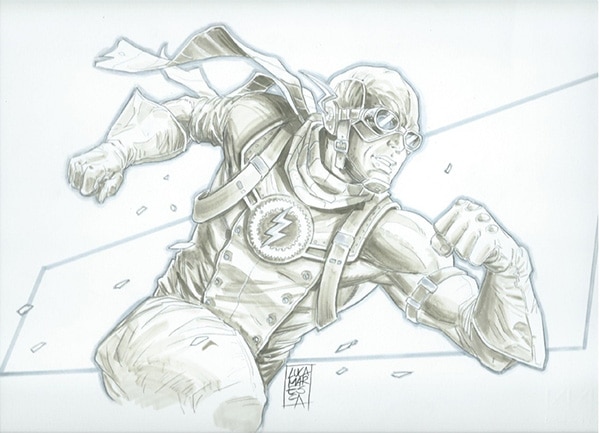
Steam or no steam, he is still the fastest man alive.
8) Black Cat – Victorian feline elegance (Mahmud A. Asrar)
Crouched with confidence, Black Cat fully embraces her charm and mystery. Between corsets, leather gloves, and retro accessories, she displays a controlled elegance perfectly suited to the rooftops and hushed parlors of a steampunk world.
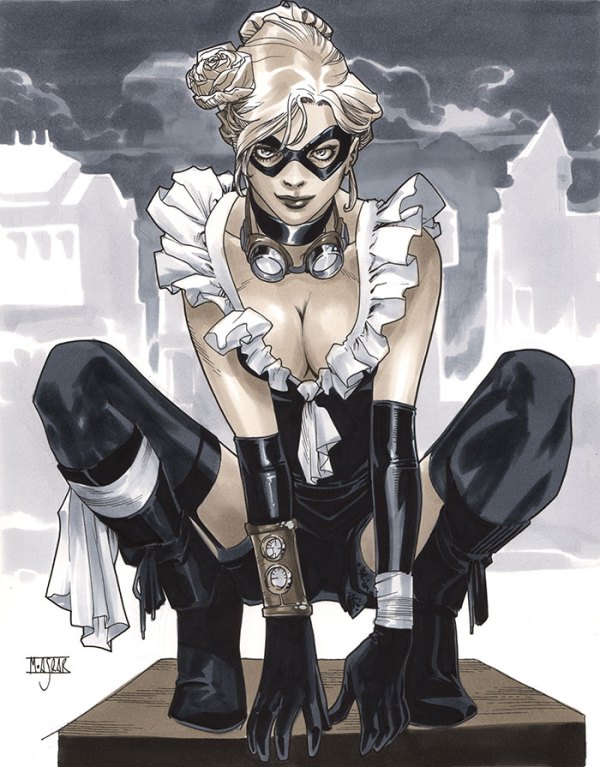
On her way to a rendezvous with Spider-Man, perhaps?
9) Venom – In the shadows of the factories (Denis Medri)
Dressed in a dark, Victorian-inspired suit, Venom takes on the look of a menacing figure straight out of the 19th century’s industrial districts. Top hat, tailored coat, and elongated silhouette enhance his threatening presence, while the contrast between man and creature highlights the character’s deep ambiguity.
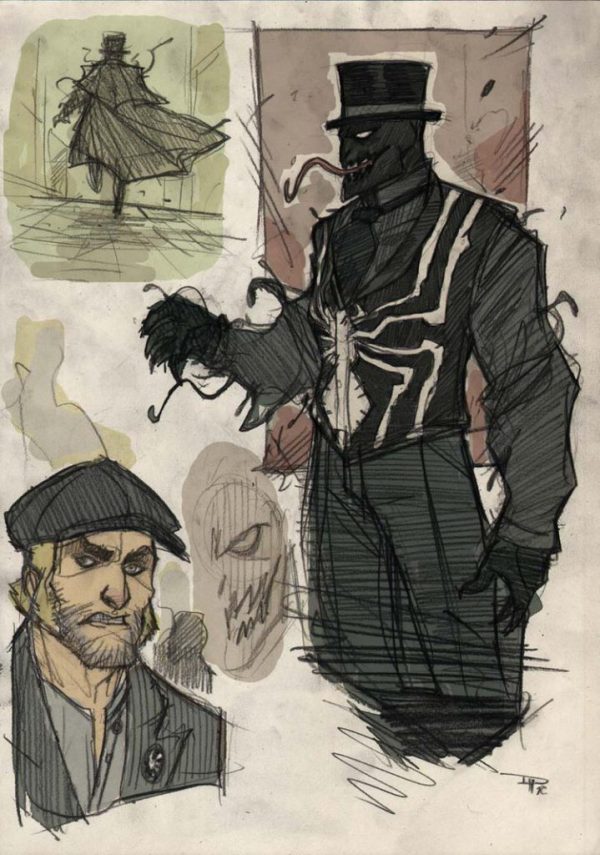
He, too, seeks Spider-Man—but mercy is not on the agenda.
10) Deadpool – The anarchic gentleman (Valentina Occhiblu)
Deadpool clearly decided that steampunk is first and foremost an attitude. Between the top hat, goggles, and an arsenal worthy of an overenthusiastic inventor, he poses as if he’s just realized this look suits him perfectly—and plans to make sure everyone knows it.
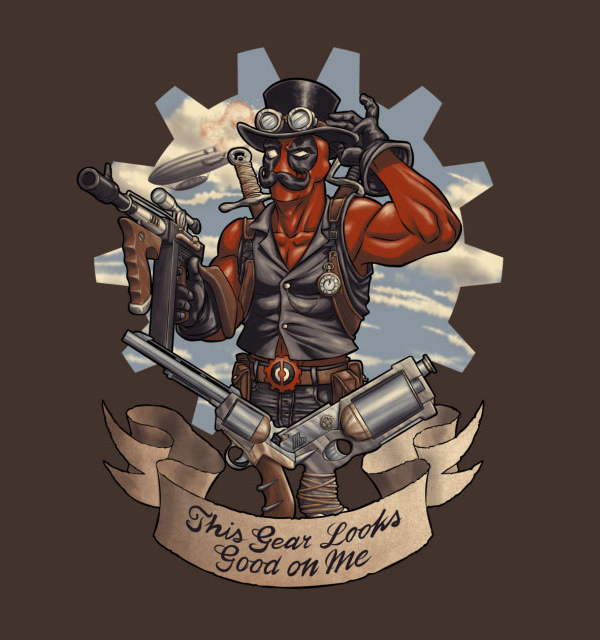
pocket watch, he reaches the height of refinement!
11) Batgirl – Gotham’s mechanical rider (J.G. Jones)
Racing full speed on a retrofuturistic motorcycle, Batgirl radiates contagious energy and total mastery of her machine. Blending leather, brass, and exposed gears, this steampunk version combines a spirit of adventure with modern flair, carried by a heroine clearly at ease in Gotham’s streets—and skies.
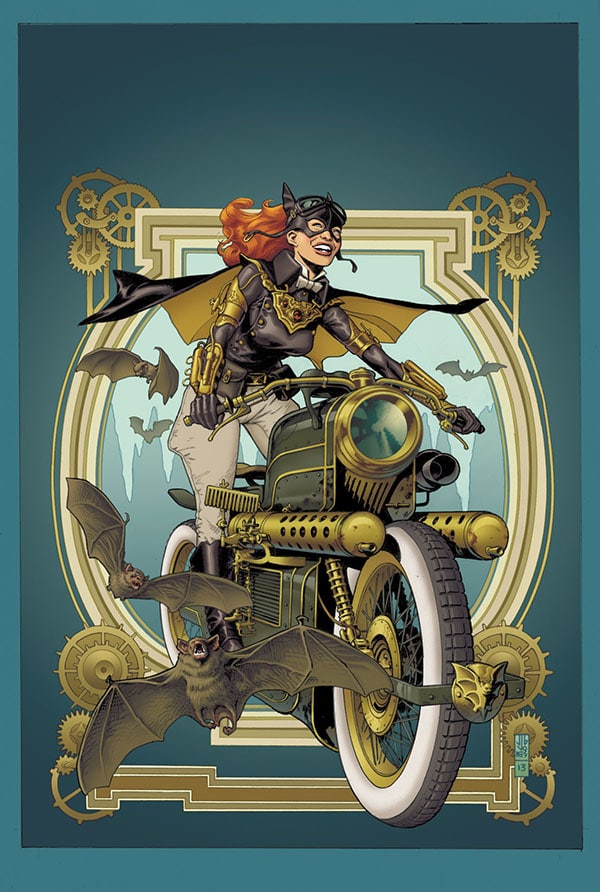
Dare we say it—even cooler than the Batmobile?
12) Martian Manhunter and 13) Stargirl – Sentinels among the zeppelins (Matteo Scalera)
Soaring through the air amid a swarm of flying machines, Martian Manhunter and Stargirl seem perfectly at ease in this steampunk sky. Between silent vigilance and heroic energy, the duo watches over the industrial city from above.
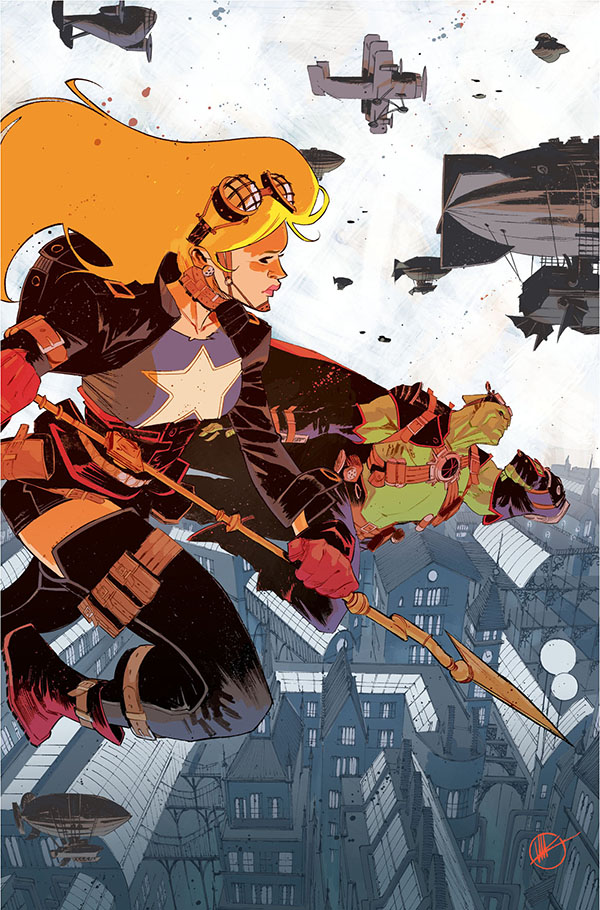
Few Justice League members have ever looked so at home among zeppelins.
14) Captain America – The soldier of the industrial age (Brian Kesinger)
Shield raised and stance resolute, Captain America retains his role as a protective figure, even when transposed into a steampunk universe. Between period uniform and retro equipment, he moves forward with the same integrity, ready to stand his ground no matter the circumstances.
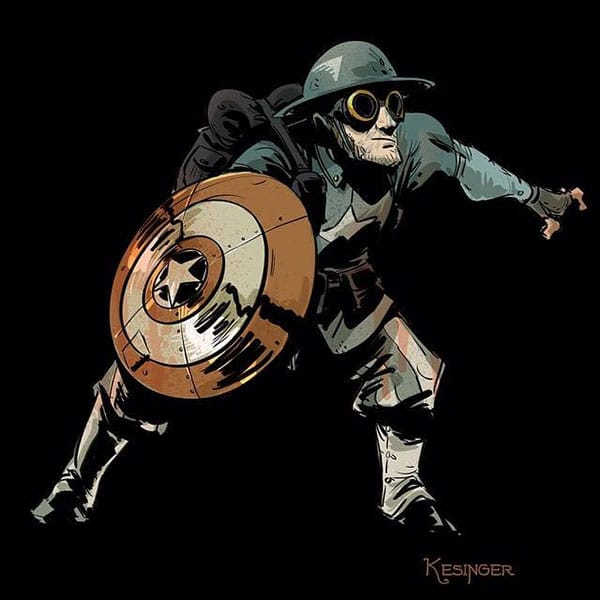
Across centuries, Steve Rogers and his shield are inseparable.
15) Magneto – Master of metal and machines (Arturo Aguirre)
Upright posture, stern gaze, and Victorian-inspired attire: Magneto exudes natural authority. In this steampunk world ruled by metal and machinery, he seems to operate on familiar ground, as though the era itself were designed for him.
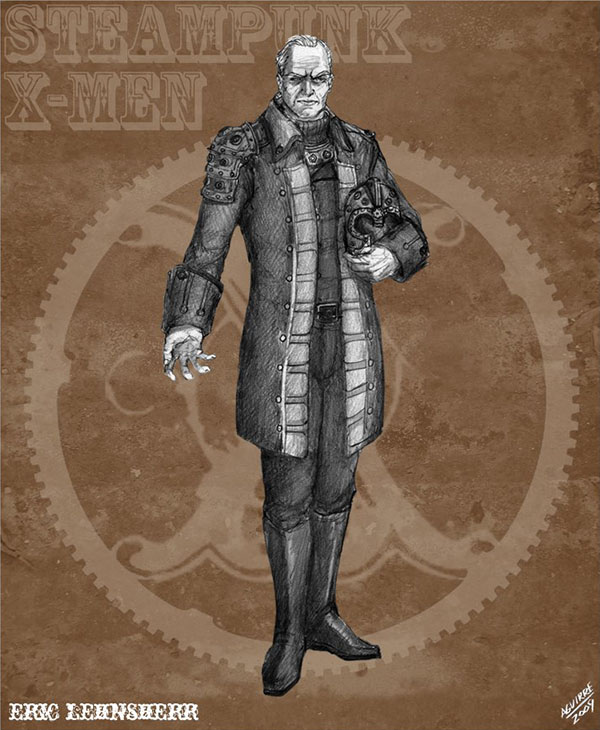
Erik Lehnsherr, ruler of a world forged in steel.
16) Green Lantern – Light in the age of steam (Tom Kyzivat)
Equipped with mechanical gear and glowing vials, Green Lantern appears to draw his power from an energy both mysterious and controlled. Somewhere between alchemy and handcrafted technology, he represents a new kind of light in a steam-driven world.
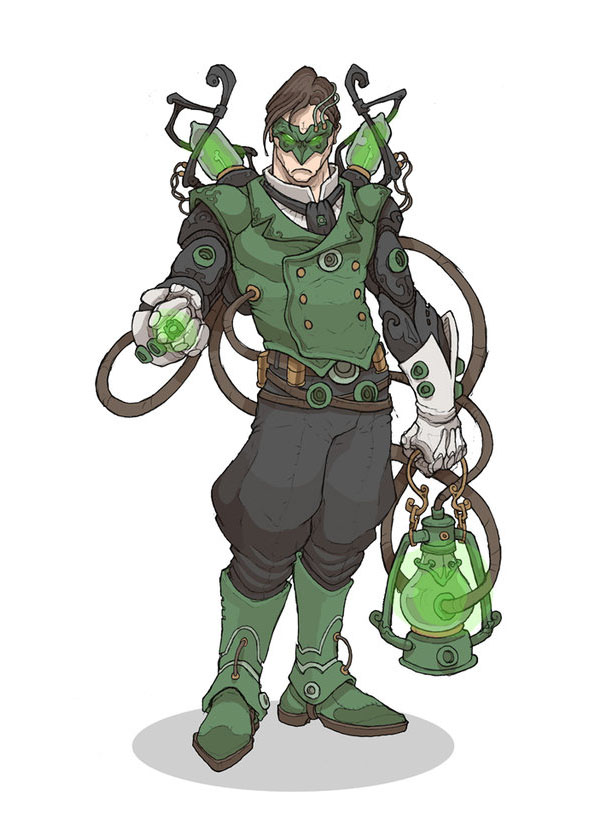
Steam Lantern
17) Black Widow – The mechanical spy (Chris Stevens)
In a 19th century rife with political intrigue and espionage, Black Widow emerges as a dangerously elegant figure. Between corsets, exposed gears, and sophisticated prosthetics, she embodies a heroine perfectly suited to a steampunk world where precision is a weapon.
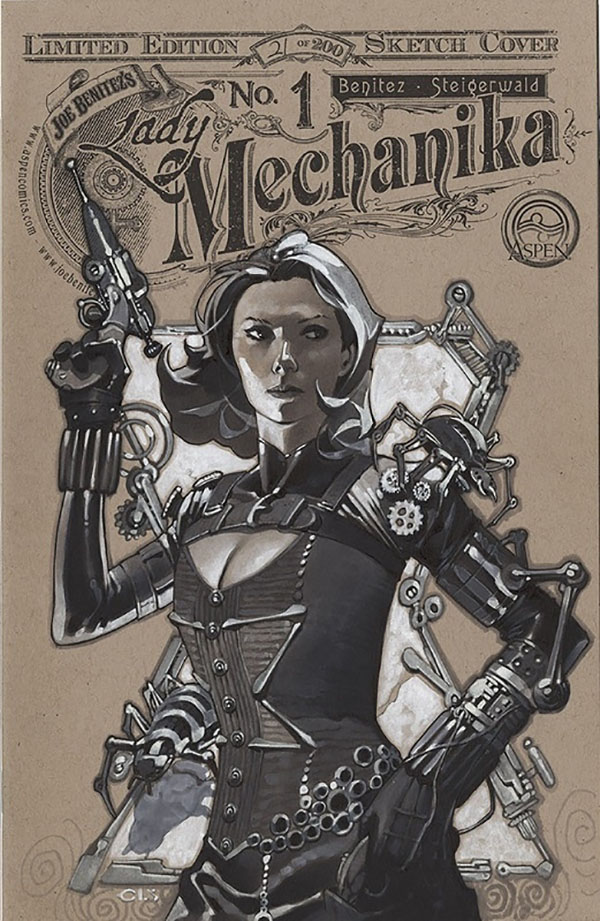
Black Widow takes center stage on this collector cover created for the release of the comic Lady Mechanika.
18) Iron Man – The genius of copper and steel (Thomas Tan)
Steampunk Tony Stark becomes a visionary inventor, a direct heir to the great engineers and mad scientists of Victorian literature. His armor is the ultimate expression of industrial fantasy.
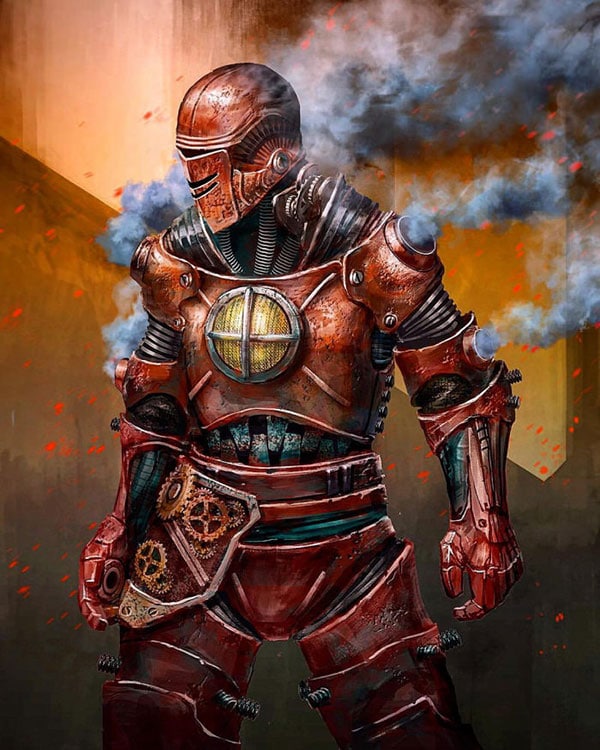
This steampunk version of Iron Man’s armor releases a lot of steam. Stand back!
19) Doctor Octopus – The mad scientist (Denis Medri)
Seated at the heart of his mechanical apparatus, Doctor Octopus resembles an inventor consumed by his own creations. Surrounded by articulated arms and complex machinery, he embodies steampunk’s fascination with scientific genius—and its excesses.
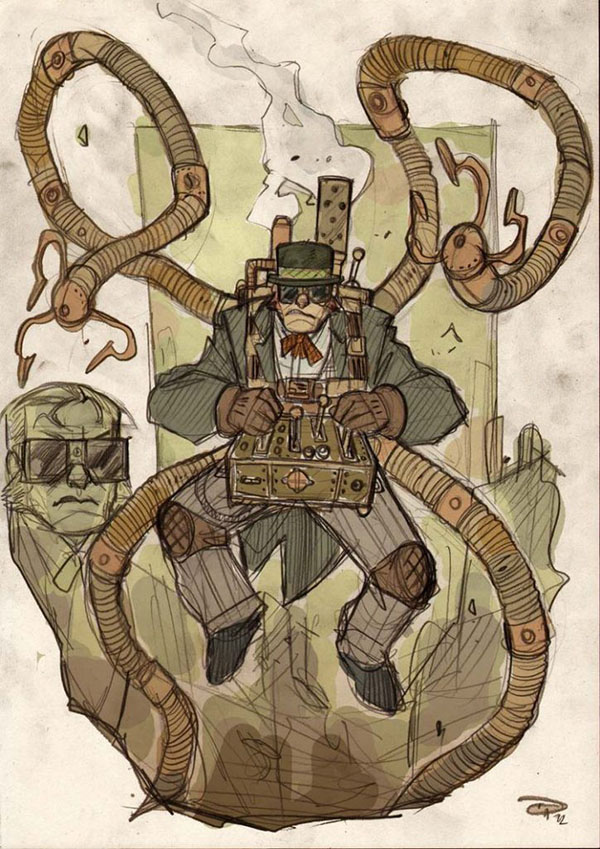
Doctor Octopus, the most steampunk supervillain of them all?
20) Wolverine – The beast beyond time (Michail Rakhmatullin)
Scarred body, feral stare, and claws extended, Wolverine cuts through this steampunk universe without losing any of his brutality. No matter the era or surrounding technology, he remains an untamable force, guided more by instinct than by machinery.
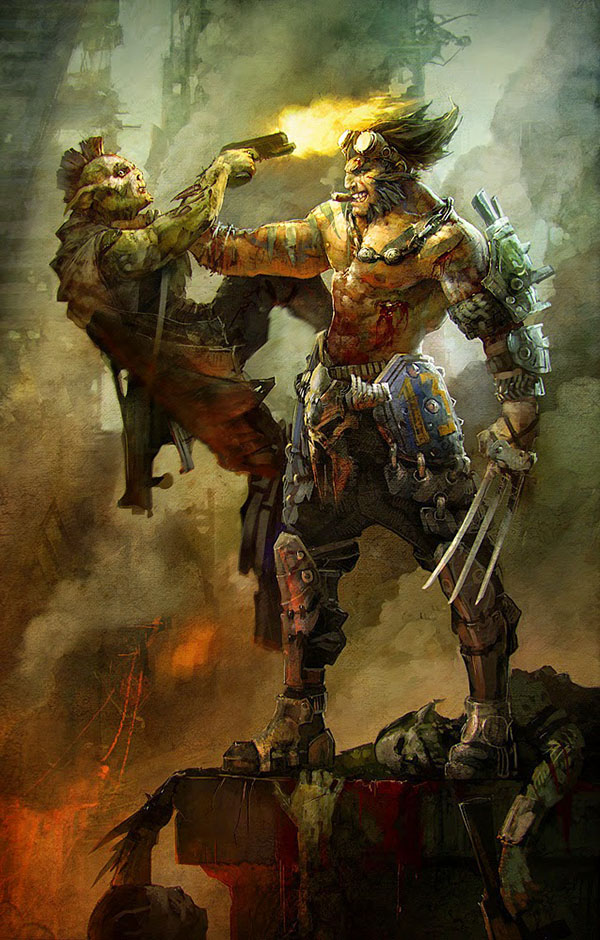
Logan may cross eras, but one thing never changes: you really don’t want to mess with him.
When steam extends the myth
From fog-drenched rooftops to skies crowded with airships, these steampunk reimaginings highlight the extraordinary adaptability of superheroes. Shifting eras and aesthetics doesn’t dilute their power—it sharpens it, revealing the timeless core beneath the costume.
For artists, steampunk remains a fertile playground; for readers, a reminder that great icons endure not because of when they were created, but because of what they represent.